
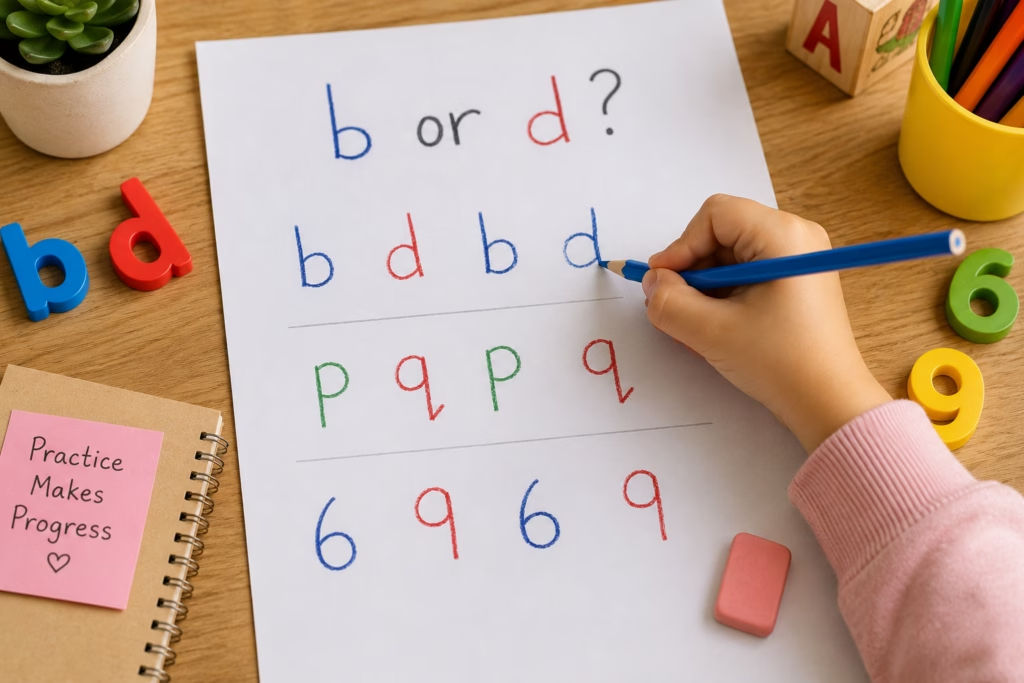
Imagine, you’re sitting with your child doing a little writing practice and everything seems fine. Then suddenly you notice that the b looks like a d.
Or the number 6 has become a 9.
Maybe yesterday your child wrote the letter correctly, but today it’s backwards again. And naturally, you start wondering: Didn’t we just learn this? Why are they getting it wrong again? We’ve practised this enough!
Trust me moms, if you’ve had this moment, you’re definitely not alone.
Mixing up letters and numbers is something many children do when they are learning to read and write. What looks very obvious to us isn’t always obvious to a four- or five-year-old who is still trying to remember what each symbol looks like, which way it faces and how to actually make it with a pencil.
So before worrying too much about that backwards b, let’s understand what’s actually going on.
Why Do Kids Mix Up Letters and Numbers?
To us, b and d are completely different letters. We don’t even have to think about it.
But look at them from a child’s point of view.
b d p q
They’re basically the same few shapes turned in different directions.
And this is where it gets interesting. In most parts of a child’s world, turning something around doesn’t change what it is.
Turn a toy car around. It’s still a car.
Put a teddy bear upside down. It’s still the same teddy bear.
Turn a spoon the other way. Still a spoon.
Letters don’t play by those rules.
Turn b around and suddenly it’s d. Move things around a little more and you have p or q.
That’s quite a strange rule when you’re only four years old and still figuring all this out.
Numbers can cause the same problem. 6 and 9 are an obvious pair, while some children may also mix up 2 and 5, or even confuse certain letters and numbers that look similar.
It takes time before all these little differences become automatic.
If your little one is still getting familiar with letter shapes, our free preschool alphabet tracing worksheets can give them some extra practice without making it feel like a big lesson.
“But My Child Knows the Letter!”
This is probably the part that confuses parents the most. Trust me, I have been there too!
You show your child a letter and ask, “What’s this?”
“B!”
Perfect.
Then you take the letter away and ask them to write B… and somehow it comes out backwards.
It can feel like they weren’t paying attention or have forgotten what you just taught them. But recognizing a letter and writing one from memory are actually different things.
When the B is sitting in front of your child, they have something to look at. When they have to write it themselves, they need to remember what it looks like, remember which direction it faces and then get their hand to make that shape on the paper.
That’s a lot more work. So don’t be surprised if your child can point out a letter correctly but still struggles to write it.
Sometimes it also helps to connect the letter with its sound instead of focusing only on how it looks. If you’re working on this stage at home, you can read our simple daily phonics routine for 5-year-olds.
Is It Normal for Preschoolers to Write Letters Backwards?
In the early years, yes! It can happen.
Imagine a four-year-old called Adam who has recently learned to write his name.
He’s very proud of it. He writes it on his drawings, his little notes and probably on a few things around the house that you wish he hadn’t!
Most days he gets it right. But every now and then, one of those letters comes out backwards.
That doesn’t necessarily mean Adam has forgotten his name or doesn’t know the letter. He may simply not have completely mastered how to form it yet.
This is something that’s easy to forget as adults. Writing feels effortless to us now, but children have to learn everything about it from scratch, like how to hold the pencil, where to start the letter, which direction to move their hand and when to stop.
And they’re trying to remember the actual letter at the same time.
No wonder there are a few backwards ones along the way.
For children who are still developing pencil control, you can also start with preschool pattern tracing worksheets before expecting perfectly formed letters. They give little hands practice following lines, curves and patterns.
Which Letters and Numbers Do Children Commonly Mix Up?
Some letters are simply easier to confuse than others.
The ones parents often notice are:
b and d
p and q
m and w
6 and 9
2 and 5
You might also notice your child writing a perfectly recognizable letter, just facing the wrong direction.
Numbers can be the same.
For instance, your child may count six strawberries correctly, point to a group of six objects and understand exactly what “six” means — but then write the number 6 backwards.
That’s an important difference.
They haven’t necessarily misunderstood the number. They may simply be having trouble writing its symbol.
If numbers are the main struggle, try our preschool number tracing and coloring worksheets. They give children a chance to see, trace and write the same numbers repeatedly.
Why Does This Keep Happening?
Usually, there isn’t one big reason behind it.
Your child is learning several things at the same time.
First, there’s direction. Left and right aren’t always completely settled concepts for preschoolers. Then there’s visual memory, that is, remembering exactly what a letter looks like when it isn’t sitting in front of them.
And then there’s the physical side of writing.
Holding a pencil and making controlled little movements isn’t as easy as it looks. Adults have been doing it for decades, so we forget how much coordination it actually takes.
Sometimes the child’s brain knows the answer, but the hand hasn’t quite caught up.
And sometimes, honestly, the letters just look very similar.
If you put b, d, p and q next to each other, you can understand why a beginner might occasionally get confused.
Does Writing Letters Backwards Mean Dyslexia?
This is where a simple backwards letter can suddenly become much more worrying for a parent.
You notice your child reversing letters, search online, see the word dyslexia and suddenly you’re analysing every letter they’ve ever written.
But writing letters backwards by itself does not mean your child has dyslexia.
Children who don’t have dyslexia can reverse letters too, particularly while they’re still learning to read and write.
Instead of focusing on one backwards letter, look at the bigger picture.
Is your child learning new letters over time? Are they beginning to connect letters with sounds? Are they showing an interest in books, signs or words around them? Is their writing slowly becoming easier?
Progress matters much more than whether yesterday’s b accidentally faced the wrong direction.
Of course, if you have wider concerns about your child’s reading, speech, language or learning, that’s a different conversation and worth discussing with their teacher or an appropriate professional.
But one backwards d isn’t a diagnosis.
So, What Can You Do at Home?
This is where I think we sometimes make learning harder than it needs to be.
If a child keeps getting b wrong, our instinct can be to sit them down and make them write:
b b b b b b b b b b
By number eight, neither you nor your child is enjoying this anymore.
Instead, try changing the way you practise.
Write a giant b in the air with your finger. Make one from playdough. Trace it in sand. Look for the letter on a cereal box or while reading a bedtime story.
You can even turn it into a little game:
“Who can find three Bs in this book?”
Suddenly your child is looking carefully at the shape without feeling like they’re being tested.
The same works with numbers.
If 6 keeps becoming 9, make a huge 6 in the air together. Draw one with your finger on the table. Make six little balls of playdough and put the number next to them.
Then try writing it on paper.
It doesn’t always have to begin with a pencil.
For a little structured practice in between these games, you can use our alphabet tracing worksheets or explore the phonics worksheets for letter sounds, beginning and ending sounds and other early-reading activities.
Don’t Correct Every Little Thing
This one can be difficult…
Your child comes running over, very excited, because they’ve written their name all by themselves.
You look at it.
Four letters are perfect.
One is backwards.
What do you notice first?
It’s very easy to immediately say, “This one’s the wrong way.”
But your child probably sees something completely different. They see: I wrote my name!
You can still help them correct the letter, of course. Just don’t let the correction become bigger than the achievement.
Something as simple as, “Wow, you remembered all the letters! Let’s fix this little one together,” can turn it into a much nicer moment.
Children are going to make mistakes while learning. That’s not something we need to eliminate from the process. All they want to hear is a bit of appreciation.
Little Bits of Practice Work Better
You don’t necessarily need a 30-minute handwriting session every day.
Five or ten minutes here and there can be enough.
Maybe today you find the letter B in a book.
Tomorrow you make it with playdough.
Another day your child spots it on a shop sign.
Later in the week, they try writing it.
These little repetitions add up. And because they happen in different ways, they don’t feel like the same lesson over and over again.
You can also sneak learning into ordinary moments.
While making your shopping list, ask, “Bananas starts with B. Can you show me B?”
If you’re eating cereal, make an O with a few cereal pieces.
When you’re outside, look for numbers on doors or cars.
You don’t have to turn your house into a classroom. Sometimes the best practice happens when your child doesn’t even realize they’re practising. I believe that learning in the form of playing leaves a strong mark on a child’s mind.
If you’re looking for more simple ideas like these, I have also shared some printable learning activities for kindergarten kids at home that you can easily fit into your normal routine.
When Should You Pay More Attention?
Children don’t all learn at exactly the same speed, so there’s no need to compare every backwards letter with what another child is doing.
Still, it’s worth keeping an eye on the overall pattern.
If your child is getting older and letter or number reversals are still happening very frequently, particularly alongside other difficulties with reading, writing, remembering letter sounds or language, talk to their teacher.
A very useful question is simply:
“Are you seeing this at school as well?”
Teachers see your child working with letters and numbers in a different setting and may be able to tell you whether it’s something they’re concerned about or just part of the learning process.
If there are broader concerns, you can then decide together whether your child would benefit from some additional support.
If the main difficulty seems to be connecting letters with their sounds, our step-by-step guide to teaching phonics may also help you understand where your child is getting stuck.
That Backwards Letter Isn’t the Whole Story
The next time your child hands you a page and there’s a backwards b sitting right in the middle of it, try looking at everything else on the page too.
Maybe they remembered the other five letters.
Maybe last month they couldn’t write their name at all.
Maybe that shaky little sentence took them ten minutes and a huge amount of concentration.
Those things matter too.
Learning to read and write doesn’t happen in one neat straight line. Sometimes a child gets something right today and wrong tomorrow. Then one day, without you really noticing when it happened, they stop thinking about it altogether.
The b is simply a b.
The 6 is automatically facing the right way.
And you’re already worrying about the next thing they’ve decided to learn.
That’s childhood. And eventually kids will learn. So stop stressing over these things. Instead, try some of the methods we’ve discussed in this blog and see what works best for your child. Hope it helps 🙂
Frequently Asked Questions
Is it normal for a 4-year-old to write letters backwards?
It can be. Young children are still learning letter shapes, direction and how to reproduce letters from memory. An occasional backwards letter during early writing practice isn’t unusual.
Why does my child confuse b and d?
They are very similar shapes facing opposite directions. It can take time and repeated exposure before a child recognizes and writes both letters automatically.
Why does my child write numbers backwards?
Your child may understand what a number means while still learning how to write its symbol correctly. Knowing that six objects represent “six” and remembering exactly how to write 6 are related but separate skills.
Does writing backwards mean my child has dyslexia?
Not necessarily. Letter reversals alone aren’t enough to determine whether a child has dyslexia. If you’re noticing broader or ongoing difficulties with reading, writing, sounds or language, speak with your child’s teacher or an appropriate professional.
How can I help my child remember letters?
Keep it simple and playful. Try tracing letters, making them with playdough, writing in sand, drawing them in the air and finding letters in books, signs and packaging around the house.
Should I keep correcting backwards letters?
Gently show your child the correct way, but you don’t need to turn every mistake into a lesson. Notice what they got right as well. Confidence and practice can happily exist together.